After studying Lesson 4-2, you will be able to:
- Identify several types of financial records needed by businesses.
- Describe the differences between an income statement and a balance sheet.
Assignment 4.2.1
- Obtain a copy of the notes handout.
- Read Lesson 4-2 on pages 294-298.
- As you read, utilize this presentation to help you fill in the missing parts on the handout.
Assignment 4.2.2
Assignment 4.2.3
- Make a copy of this Google Sheet, rename it Financial Statements-(Your Initials), and move it into your Lesson 4 folder.
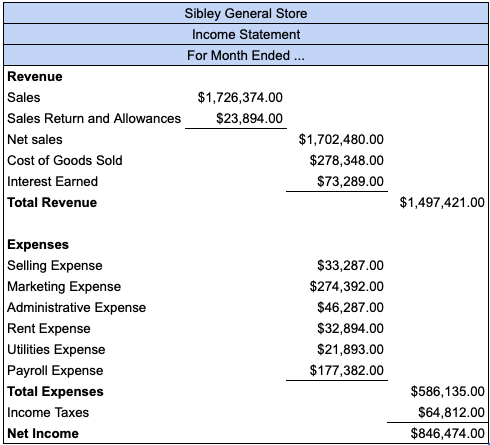
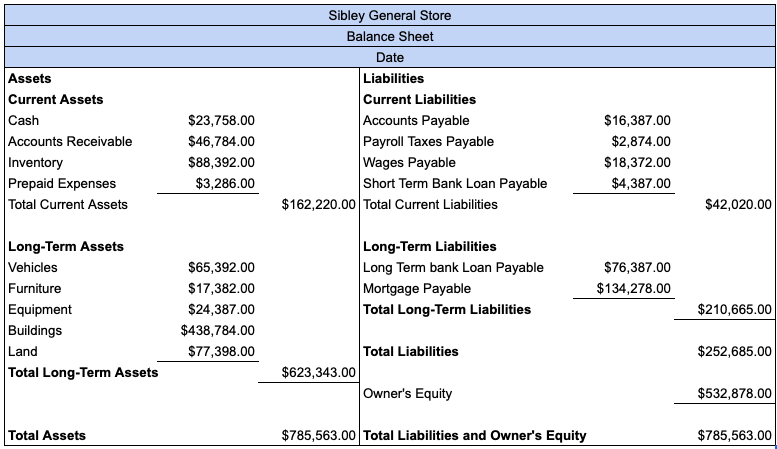
- Using the information and images below as well as Figures 12-2 and 12-3 in your textbook, prepare a balance sheet and income statement in your Financial Statement spreadsheet for Sibley General Store.
- Balance Sheet
- Accounts Payable – $16,387
- Accounts Receivable – $46,784
- Buildings – $438,784
- Cash – $23,758
- Equipment – $24,387
- Furniture – $17,382
- Inventory – $88,392
- Land – $77,398
- Long Term Bank Loan Payable – $76,378
- Mortgage Payable – $134,278
- Owner’s Equity – $514,506
- Payroll Taxes Payable – $2,874
- Prepaid Expenses – $3,286
- Short Term Bank Loan Payable – $4,387
- Vehicles – $65,392
- Wages Payable – $18,372
- Income Statement
- Administrative Expense – $46,287
- Cost of Goods Sold – $278,348
- Income Taxes – $64,812
- Interest Earned – $73,289
- Marketing Expense – $274,392
- Payroll Expense – $177,382
- Rent Expense – $32,894
- Sales – $1,726,374
- Sales Return and Allowances – $23,894
- Selling Expense – $33,287
- Utilities Expense – $21,893